
Professional Rug Cleaning: The Art of Preservation
At Rugs On Net, our Manhattan studio provides a complete spectrum of specialized care for your hand-knotted textiles. Beyond this service, we ensure your investment remains structurally sound and visually vibrant.
Also read about our other services we offer: Expert Rug Repair & Restoration Services, Rug Blocking and Stretching, Moth Proofing, Rug Resizing, On-Site Stain Removal and Rug Rentals.
A fine hand-knotted rug is not a floor covering; it is a living textile that requires a specific scientific approach to maintenance. While standard carpet cleaning focuses on surface-level aesthetics, Professional Rug Restoration is about the mechanical preservation of the fibers.
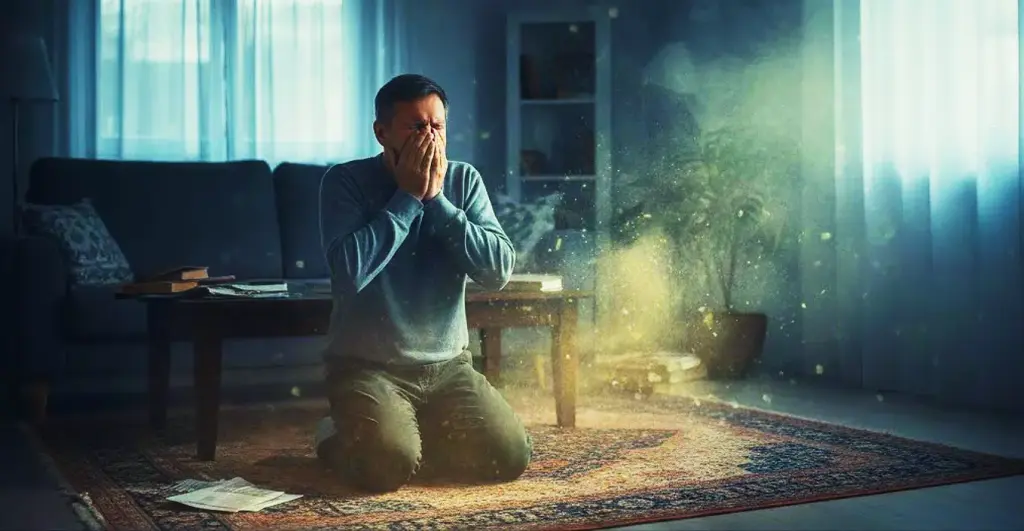
Every day, your rug acts as a high-performance filter for your home, trapping airborne particulates and microscopic grit. Over time, these sharp particles settle deep into the foundation where household vacuums cannot reach. Left alone, this grit acts like “micro-saws,” cutting into the wool and silk knots every time the rug is stepped on.
Why Scholarship Matters in Cleaning
At Rugs On Net, we approach cleaning area rugs from the perspective of a dealer and curator. We understand that a 19th-century Persian Kerman carpet requires a different pH-balanced environment than a modern high-lanolin tribal weave. Our process is designed to flush out destructive abrasives and replenish the natural oils of the wool, ensuring your investment remains vibrant and structurally sound for generations.
The Golden Window: Why Speed is the Best Solvent
In the world of rug and textile conservation, time is the enemy. The longer a contaminant sits in a natural fiber, the more it moves from a “surface spill” to a “chemical bond.”
- The Oxidation Risk: Organic materials like wine, coffee, or pet waste undergo a chemical change called oxidation when exposed to air. Once a stain oxidizes, it can permanently alter the molecular structure of the wool’s dye sites.
- The pH Shift: Spills often shift the rug’s pH balance. Left untreated, this can cause “dry rot” in the cotton foundation or make the wool fibers brittle.
- Our Advice: If a spill occurs, blot immediately and contact our Manhattan studio. Even if you cannot bring the rug in today, a professional consultation can prevent you from using a “home remedy” that might permanently set the stain.
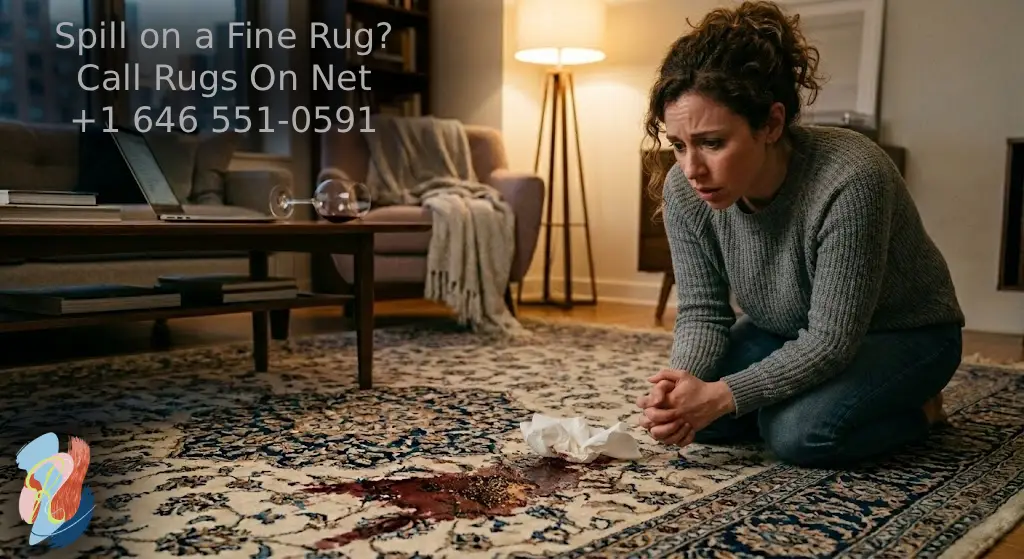
Beyond Aesthetics: Why Professional Rug Cleaning is Non-Negotiable
Many homeowners wait until a rug “looks dirty” to schedule a cleaning. From a dealer’s perspective, this is a mistake. By the time soil is visible on the surface, the rug’s internal structure has already begun to suffer. Professional cleaning is about longevity, hygiene, and investment protection.
Prevention of Fiber Abrasion (The “Sandpaper Effect”)
Rugs in New York City apartments are subject to high levels of microscopic grit and carbon dust. When these particles settle into the foundation, every footfall causes them to grind against the wool or silk knots.
- The Risk: This mechanical wear thins the pile and eventually causes “bald spots” or foundation failure.
- The Solution: Our deep-dusting process removes this abrasive grit before it can cause permanent structural damage.
Pathogen & Allergen Extraction
Hand-knotted rugs are the world’s most effective passive air filters. They trap dust, pollen, and pet dander that would otherwise circulate in your breathing zone.
- The Risk: Over time, these particles become “locked” in the lanolin of the wool, creating a breeding ground for bacteria and odors.
- The Solution: Our pH-balanced wash flushes out these trapped allergens, significantly improving the indoor air quality of your home.
Lanolin Replenishment & Fiber Resilience
Natural wool contains lanolin, which keeps the fibers supple and stain-resistant. Atmospheric pollutants and dry indoor heating can strip these oils, leaving the rug brittle and prone to “shedding.”
- The Goal: We use specialized conditioners to replenish the wool’s natural luster, ensuring the fibers remain flexible and resilient against heavy foot traffic.
Protection Against Pest Infestation
Moths and carpet beetles thrive in the “quiet” areas of a rug—the sections tucked under sofas or beds where dust accumulates.
- The Reality: A clean rug is a hostile environment for pests. Regular professional washing is the single most effective way to prevent a costly infestation that could destroy an antique textile.
The Diagnostic Phase Of Rug Cleaning: Identifying Hidden Vulnerabilities
Before a drop of water touches the fibers, our first priority is the “Do No Harm” protocol. Unlike general cleaners, we approach every textile with a dealer’s forensic eye. We don’t just see a rug; we see its history—including the “invisible” repairs and structural weaknesses that standard cleaning processes could trigger.
Working Around Complex Rug Condition Issues
Antique and vintage rugs often carry the weight of previous restorations.
Our evaluation phase identifies:
- Previous “Painting” & Ink Work: We detect where past dealers may have used ink or dye to “touch up” worn areas. Standard cleaning chemicals can dissolve these inks, causing them to bleed across the rug. We utilize specialized blockers to stabilize these areas before washing.
- Reweaves & Structural Patches: We locate old reweaves that may have used different wool types or tensions. Our drying process is carefully calibrated to ensure these sections don’t shrink or pull at a different rate than the original foundation.
- Dry Rot & Foundation Damage: Through a physical flexibility test, we identify “dry rot”—areas where the cotton foundation has become brittle. We adapt our immersion technique for these fragile zones to prevent splitting or tearing.
- Ink & Dye Transfer: Whether it’s a leaked pen or a “bleed” from a nearby textile, we use specialized suspension agents to lift foreign pigments without affecting the rug’s original vegetable or chrome dyes.
- Water Damage & Watermarks: Floods or leaking planters often leave “tide marks” (dark, brittle rings caused by lignins moving from the foundation to the pile). We utilize a full-saturation flush and controlled-wicking drying process to erase these marks and restore the foundation’s flexibility.
- Color-Run Correction: If a rug has been previously washed incorrectly or sat in water, the dyes may have “migrated” into the ivory or light-colored fields. We perform delicate, hand-applied dye-stripping to pull the bleeding colors back, restoring the sharp, crisp borders of the original design.
Our “No Harm” Commitment
We provide a full transparency report before the wash begins. If we discover a condition issue—such as a fugitive dye or a compromised foundation—we pause and consult with you. We treat every rug as a singular piece of history, adjusting our pH levels and water temperature to accommodate the weakest point of the textile.
The Rugs On Net Cleaning Process
We don’t use automated “wash-and-dry” machines. Every textile that enters our Manhattan studio undergoes a multi-stage, hand-executed restoration process tailored to its specific history and chemical makeup.
Phase 1: Forensic Evaluation & Dye-Stability Testing
Before a drop of water touches the fibers, we conduct a high-level diagnostic. This includes identifying the specific wool or silk origin, checking for existing structural repairs (or “painted” areas), and testing every dye color for stability. We determine the pH-balanced solution required to ensure zero color migration.
Phase 2: Mechanical Dusting (Sub-Surface Grit Extraction)
Standard vacuuming only addresses the top 10% of debris. We utilize specialized mechanical dusting equipment that vibrates the rug at a specific frequency, safely dislodging the abrasive sand and “micro-grit” trapped deep within the foundation. This is the single most important step for preventing premature fiber breakage.
Phase 3: Hand-Immersion Wash (pH-Calibrated)
Using a cold-water immersion technique, we hand-brush the rug with fiber-safe, organic detergents. We never use harsh bleaches or ammonia. Every gallon of water is monitored for temperature and pH levels, ensuring we replenish the wool’s natural lanolin rather than stripping it away.
Phase 4: Natural Controlled-Air Drying
Mechanical heat is the enemy of fine wool; it makes fibers brittle and causes foundation shrinkage. We dry our rugs flat in a climate-controlled environment with high-velocity air circulation. This ensures the rug maintains its original dimensions and that the fringe remains bright and straight.
Phase 5: Final Grooming & Dealer Certification
Once dry, the pile is hand-groomed to restore its natural “lay” and luster. I personally conduct a final inspection to certify that the piece meets our dealership standards. We ensure the rug is not just clean, but that its tactile “hand” (the feel of the wool) is soft and resilient.
Rug Stain Removal Services
Emergency Stain Intervention: The “Blot, Don’t Scrub” Protocol
When a spill happens, the first 60 seconds are critical. Most permanent damage to antique and high-end rugs isn’t caused by the spill itself, but by aggressive DIY cleaning attempts. Household chemicals and vigorous scrubbing can “set” a stain or cause permanent fiber distortion (blooming).
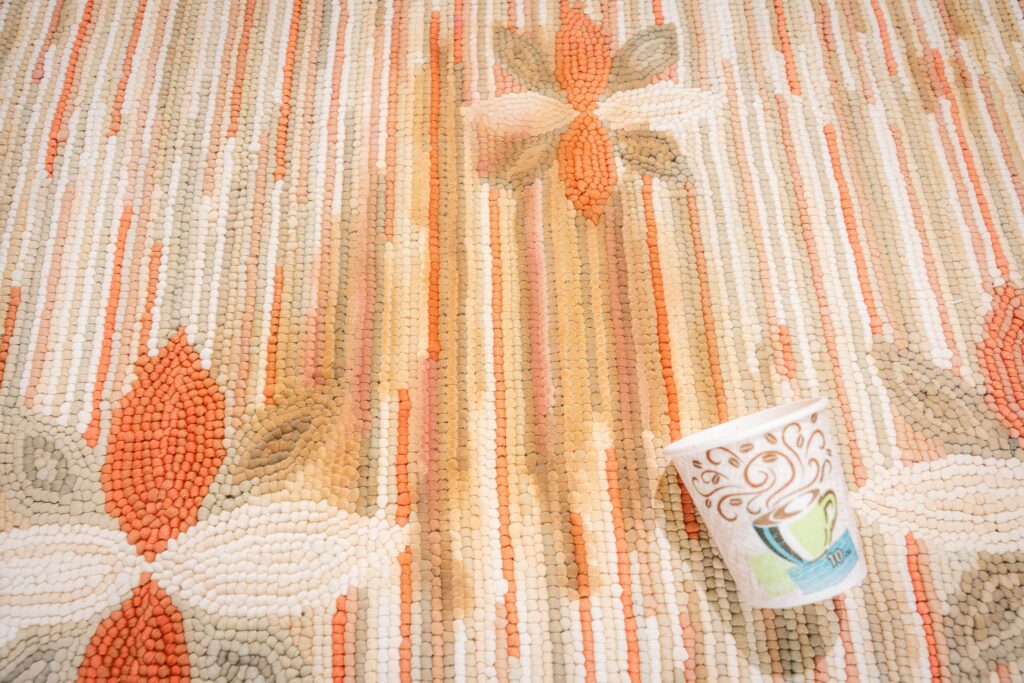
The Dealer’s First-Aid Guide:
- Immediate Outflow: Blot the area immediately with a clean, white cotton towel. Press firmly to absorb the liquid. Never rub, as this forces the pigment deeper into the wool scales and foundation.
- The Neutralizer: For water-soluble stains (wine, soda, coffee), you may use a small amount of lukewarm water to dampen a fresh cloth and continue blotting.
- The Salt Myth: Do not put salt on a wine stain. While it absorbs liquid, the salt crystals can be abrasive and difficult to fully extract from the foundation.
Our Specialized Stain Extraction Services
We treat stains as chemical puzzles. Our team uses targeted, enzyme-based solutions that break down specific molecular bonds without stripping the wool’s natural color.
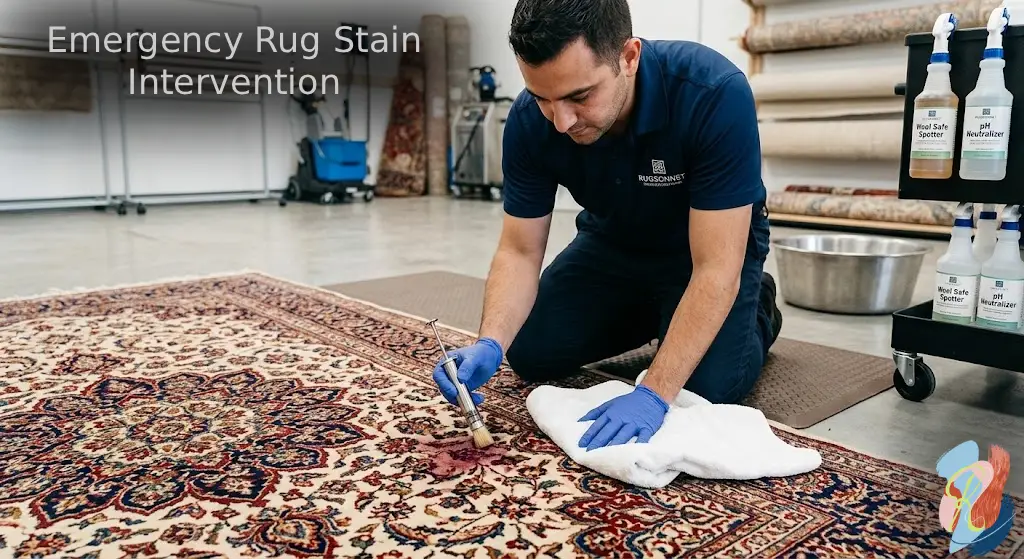
While we remove all kinds of stains from rugs, these tend to be the more popular:
- Pet Accidents & Urine: We don’t just “shampoo” the area. We utilize a full-immersion flush to neutralize the uric acid that can otherwise cause “dry rot” in the cotton foundation over time.
- Wine & Tannin Stains: We use pH-neutralizing agents specifically designed for natural dyes to lift pigments without causing “color run” into the surrounding ivory or light-colored wool.
- Wax & Oil-Based Spills: Using controlled temperature techniques, we safely suspend oils and waxes, lifting them from the fibers without melting them further into the pile.
- Oxidized Oils: Safely suspending grease and food spills that have “yellowed” over time.
- Atmospheric Carbon: Removing the grey “soot” film common in Manhattan apartments.
A Note on “Set” Rug Stains
If a stain has been in the rug for months or years, it may have physically dyed the fiber. In these cases, we offer Color Restoration. Our master weavers can often surgically remove the stained fibers or “re-tint” the area to match the original design perfectly.
Universal Cleaning Expertise: From 16th Century Antiques to Modern Masterpieces
At Rugs On Net, our capabilities are not limited by a rug’s era or origin. Because we understand the fundamental chemistry of natural fibers and the physics of varied weaving techniques, we provide specialized cleaning for the entire spectrum of the rug world.
Whether your piece is a fragile family heirloom or a high-traffic contemporary installation, we adapt our immersion and drying protocols to match its specific “textile DNA.”
Cleaning Antique & Heritage Rugs (Pre-1920)
These pieces often feature hand-spun wool and natural vegetable dyes that have aged over a century. Our approach for antiques is one of conservation. We stabilize brittle foundations and use “low-moisture” hand-washing techniques to prevent stress on aged knots, ensuring the historic patina is preserved, not stripped away.
Cleaning Mid-Century & Vintage Carpets (1940s–1970s)
Vintage rugs—such as Moroccan Beni Ourains, Scandinavian Kilims, or Turkish over-dyed pieces—require a deep understanding of varied pile heights and saturated dyes. We specialize in deep-shag particulate removal and color-locking treatments to keep vintage motifs crisp and vibrant.
Cleaning Contemporary & Designer Carpet Collections
Modern rugs often utilize complex fiber blends, including New Zealand wool, silk highlights, and intricate “high-low” carving. We treat these as precision architectural elements. Our cleaning removes modern environmental pollutants (like HVAC carbon dust) while maintaining the structural “loft” and silken sheen of the contemporary pile.
Cleaning Specialist Rug Materials: Silk, Pashmina, and Beyond
We are one of the few Manhattan studios equipped to handle high-value 100% Silk and Pashmina rugs. These protein-based fibers are extremely sensitive to pH levels. We use a proprietary “cool-temp” extraction process that prevents the yellowing or “crunchy” texture often caused by standard cleaners.
Odor Neutralization: Beyond Surface Deodorizing
A lingering scent in a fine rug—whether from a pet accident, dampness, or “old-world” storage—cannot be solved with a retail spray. Most household deodorizers simply “mask” the smell with heavy perfumes that eventually mix with the odor, creating a more complex problem.

At Rugs On Net, we treat odor and smelly rugs as a molecular contaminant trapped deep within the wool’s lanolin and the rug’s cotton foundation.
Our Three-Tiered Rug Odor Extraction Process
- The Sub-Surface Flush: Odors are often trapped in the “warp and weft” (the foundation) of the rug. We utilize a full-saturation immersion wash that flushes out the organic matter causing the smell, rather than just treating the surface pile.
- Enzymatic Bio-Breakdown: For pet-related odors, we use specialized, pH-neutral enzymes that physically “eat” the protein and uric acid molecules. This stops the off-gassing at the source, ensuring the smell doesn’t return on a humid day.
- Atmospheric Decontamination: For rugs affected by smoke, cooking oils, or “musty” basement storage, we use a controlled-air drying process that pulls contaminants out of the fibers without using heat, which could otherwise “bake” the scent into the wool permanently.
The “New York Apartment” Factor
Manhattan rugs are subject to unique environmental odors, including HVAC carbon dust and seasonal humidity. Our conservation wash replenishes the wool’s natural ability to filter the air without holding onto these urban scents.
Professional Scotchgard & Fiber Protection: An Invisible Shield
While many homeowners search for Scotchgard rug cleaning, it is important to understand that not all protectors are created equal. At Rugs On Net, we provide a Professional-Grade Fiber Shielding service that goes far beyond retail spray cans. Our treatment is specifically calibrated for high-value natural fibers like wool, silk, and pashmina.
The Science of Surface Tension
Our professional Scotchgard application creates an invisible, molecular barrier around each individual fiber. It does not change the “hand” (the feel) or the natural luster of the wool.
Instead, it fundamentally alters the physics of the rug’s surface:
- Liquid Beading (Stain Prevention): Spills—from red wine to coffee—will “bead up” on top of the pile rather than immediately wicking into the core of the fiber. This gives you a critical “Golden Window” to blot the spill before it becomes a permanent stain.
- Dry Soil Release: It prevents abrasive grit and Manhattan carbon dust from “velcro-ing” to the wool scales. This makes your weekly vacuuming significantly more effective at removing the “micro-saws” of sand that cause fiber breakage.
Is Scotchgard Safe for Antique Rugs?
Yes, when applied by a specialist. Unlike cheap, silicone-based protectors that can “suffocate” a rug, we use a vapor-phase, pH-neutral application.
- Breathability: Our treatment allows the rug to “breathe,” which is essential for preventing dry rot in the cotton foundation.
- No Residue: It leaves zero sticky residue, ensuring your rug doesn’t “attract” more dirt—a common problem with low-quality, “near me” carpet cleaning sprays.
Why Apply Protection After Cleaning?
We recommend applying professional fiber protection immediately after our conservation wash. This ensures the barrier is bonded to a perfectly clean fiber, providing maximum durability for foyer, dining room, and high-traffic area rugs.
Why Rug Collectors, Private Consumers and Interior Designers Choose Rugs On Net For Cleaning
While we serve the Tri-State area daily from our Manhattan studio, our reputation for conservation-level care extends far beyond New York. Because true expertise in antique and high-value textiles is rare, we regularly receive shipments from collectors, estate managers, and interior designers from all over the world. Entrusting a one-of-a-kind heirloom to a cleaner is a significant decision.

Here is why clients choose to ship their most prized possessions to our care:
A Destination for Technical Excellence
Most local cleaning services are “generalists” who handle synthetic wall-to-wall carpeting and handmade Persian silks with the same automated machinery. At Rugs On Net, we are Textile Scholars. We understand the distinct chemistry of vegetable dyes from 19th-century Malayer and the delicate structural needs of a mid-century Scandinavian Kilim.
The Logistics of Trust
Shipping a rug across the country—or across an ocean—requires absolute confidence in the recipient’s integrity and process.
- Global Shipping Support: We assist our out-of-state and international clients with professional packing guidance and secure logistics to ensure their rugs arrive safely at our studio.
- Transparent Communication: From the moment your rug arrives, you receive a forensic diagnostic report and a clear restoration plan. You are never “in the dark” about the status of your investment.
- Museum-Grade Results: People ship to us because they know we can solve the problems others won’t touch—from catastrophic color-run to centuries of accumulated carbon soot.
Manhattan Heritage, Global Cleaning Standards
Operating in the heart of the New York rug district for over 45 years has given us access to the world’s most complex and valuable textiles. We bring that same “High-Stakes” standard to every rug we clean, whether it comes from a Park Avenue penthouse or a private collection in Europe.
Cleaning Costs & White-Glove Logistics
At Rugs On Net, we believe in transparent, value-based pricing. Because every textile has a unique “Textile DNA,” we provide a bespoke quote for every project to ensure the most appropriate conservation methods are used.
Rug Cleaning Services Rates
- Professional Hand-Wash Base Rate: Starts at $5 per square foot ($8 for anything with silk).
- So – how much does it cost to wash a 9×12 rug? 9 x 12 = 108sqft x $5 = $540
- Specialized Restoration: Additional fees may apply for complex stain removal (pet urine, red wine), color-run correction, or fragile antique stabilization.
- Dealer Consultation: Every rug receives an inspection included in the service to identify hidden structural issues before cleaning begins.
Flexible Cleaning Service Options: In-Studio or On-Site
We understand that some textiles are integrated into your home’s architecture or are too large for easy transport.
- Manhattan Studio Cleaning: Our most thorough, full-immersion “Deep Conservation” wash is performed at our specialized 31st Street facility.
- On-Site Professional Services: For wall-to-wall high-end broadloom or rugs that cannot be moved, we offer expert on-site cleaning using portable, low-moisture extraction technology.
Pickup, Drop-Off & Global Logistics
We make the process of transporting your investment as seamless as possible:
- Manhattan Drop-Off: Visit our Midtown studio by appointment for a face-to-face consultation.
- Professional Pickup & Delivery: We offer a white-glove pickup and return service throughout the Tri-State area for a nominal logistics fee. Our team handles the heavy lifting, ensuring your rug is rolled and transported according to dealer standards.
- Global Shipping: For our clients outside of New York, we provide detailed instructions for secure wrapping and can help arrange insured freight to our studio.
Visit Our Manhattan Location
Rugs On Net
36 E 31st Street
New York, NY 10016
+1 212-683-0167
Hours: By appointment
Our convenient midtown Manhattan location is easily accessible from anywhere in the city. Whether you are coming from the Upper East Side, Brooklyn, or across the river from New Jersey, our central address makes dropping off and picking up your rug simple and stress-free. Schedule your appointment today and give your rug the expert care it deserves.
Rug Cleaning Advice
The Risk of the “Rug Cleaning Near Me” Search
When you search for “rug cleaning near me,” the results often prioritize convenience over competence. Most local providers are carpet cleaners, not rug conservators.
Why the “local generalist” is a risk to your investment:
- The Steam Trap: Standard carpet cleaners use high-heat steam. This “cooks” the wool, stripping its natural lanolin and causing antique vegetable dyes to bleed irreversibly.
- Chemical Overload: “Near me” services often use high-pH synthetic detergents designed for nylon carpets. On a Persian or Oriental rug, these chemicals turn silk brittle and make wool feel “crunchy” or straw-like.
- Mechanical Stress: Automated “scrubbing” machines used by general cleaners can shred the delicate overcasting (edges) and fringe of a handmade textile.
At Rugs On Net, we are a destination studio. Clients from across the tri-state area bring their rugs to our Manhattan location because they know the difference between a “surface scrub” and a curator-level conservation wash.
Professional Warning: The Risk of In-Home Steam Cleaning
It is important to understand that most local carpet cleaning services utilize high-heat steam extraction, a method specifically designed for synthetic, wall-to-wall carpeting. When this high temperature is applied to a hand-knotted wool or silk rug, it acts as a destructive force rather than a cleaning agent. The intense heat “cooks” the natural fibers, stripping away the lanolin oils that provide wool with its soft texture and natural stain resistance. This leaves your rug feeling brittle, straw-like, and prone to “shedding” every time it is walked upon. Furthermore, steam cleaning only reaches the top layer of the pile, often pushing moisture and detergent residue deep into the cotton foundation where it can lead to dry rot or permanent “color-run” dye migration.
At Rugs On Net, we avoid these risks by utilizing a cold-water immersion wash that is calibrated to the specific pH requirements of your rug’s dyes and fibers. Our process involves a total flush of the textile, removing the abrasive “micro-grit” from the foundation that steam cleaners simply cannot reach. By choosing a professional hand-wash over a steam-cleaning shortcut, you are not just cleaning a floor covering; you are performing a vital conservation service that maintains the structural integrity and resale value of your investment for decades to come.
Rug Cleaning: Common Fears vs. Professional Reality
Entrusting a valuable textile to a cleaning service can be a source of anxiety for many collectors. Most “horror stories” in the rug world stem from using general carpet cleaners rather than specialized conservators. Below, we address the most common concerns we hear from our Manhattan clients.
Fear: “My rug’s colors will bleed or fade.”
The Reality: Dye migration (color-run) only occurs when unstable dyes are met with high-heat steam or high-pH chemicals. At Rugs On Net, we perform a forensic dye-stability test on every color in your rug before a single drop of water is applied. By using cold-water immersion and pH-calibrated organic surfactants, we actually “lock” the dyes in place, often brightening the original colors by removing the grey film of urban pollutants.
Fear: “The rug will shrink or lose its shape.”
The Reality: Shrinkage is caused by mechanical heat and improper drying techniques. Because we never use heated drying rooms or automated “tumble” machines, your rug’s foundation remains stable. We dry every rug flat in a climate-controlled environment with high-velocity airflow, ensuring it maintains its original dimensions and structural “lay.”
Fear: “Cleaning will make the wool feel crunchy or stiff.”
The Reality: That “crunchy” feeling is actually leftover soap residue or “cooked” fibers from steam cleaning. Our full-immersion process includes a total fresh-water flush that removes 100% of the cleaning agents. We finish every wash by hand-grooming the pile to restore its natural “hand” and luster, replenishing the lanolin so the wool feels soft and resilient.
Fear: “I’m worried about ‘hidden’ damage or old repairs being ruined.”
The Reality: This is why we are reputable rug dealers first and cleaners second. We identify “painted” areas, dry rot, and previous reweaves during our intake diagnostic. If we find a vulnerability, we utilize specialized “blocking” techniques to protect those specific areas during the wash. We treat your rug’s history with the respect it deserves, ensuring our process provides only restoration, never degradation.
FAQ
- What’s the safest way to arrange pickup/drop-off for rug cleaning in NYC?
For rug cleaning in NYC, keep the rug dry, roll it pile-in (not folded), and avoid taping directly to fibers. Ask about insured transport and climate-controlled drying for valuable pieces.
Watch: from our New York gallery
What to Do If You Spill on Your Rug
What to do if there is a spill on your rug.Professional Rug Washing in Manhattan
Washing rugs is a service we offer here in our Manhattan showroom. Email or call us for more information about getting your rugs washed.More on our YouTube channel.
- What should Manhattan apartment owners know about rug cleaning and urban soot?
Rug cleaning in Manhattan often needs deeper dust extraction because fine grit and HVAC soot settle into foundations. More frequent vacuuming and 6–12 month professional cycles help prevent premature pile thinning.
- What rug cleaning steps prevent a “musty” smell after washing at home?
The key to rug cleaning without must is fast, thorough drying—hours, not days. Elevate airflow, avoid leaving it damp on padding, and never roll or fold a wet rug.
- After rug cleaning, should you apply fiber protection, and is it safe?
Fiber protection can help after rug cleaning by giving you more blot time on spills and reducing soil cling. For antiques and natural fibers, use a pro-grade, breathable protector applied professionally.
- Should rug cleaning include rotating the rug, and how often?
Yes—rug cleaning routines should include rotating the rug about every 6 months. It evens out sun exposure and traffic so wear patterns don’t concentrate in one lane.
- Can rug cleaning help prevent moths or carpet beetles?
Regular rug cleaning reduces food sources like dust, skin cells, and pet hair that pests thrive on. Also lift and vacuum under furniture edges every few weeks—pests love undisturbed zones.
- What rug cleaning approach works best for silk or silk-highlight rugs?
Rug cleaning for silk needs cooler water, careful pH control, and gentle mechanical action to avoid texture change and yellowing. If it’s valuable, treat silk as “specialist-only.”
- Is rug cleaning different for flatweave rugs and kilims?
Yes—rug cleaning for flatweaves often requires careful handling because they can distort when wet. Gentle washing, minimal agitation, and flat drying help preserve shape.
- Can rug cleaning remove “tide marks” or water rings after a leak or plant spill?
Rug cleaning can often reduce tide marks by fully flushing the affected zone and drying evenly. Partial spot-wetting can worsen rings, so uniform saturation and controlled drying matter.
- How do you know if rug cleaning might cause dye bleed?
Before wet rug cleaning, test dyes by dabbing a damp white cloth on multiple colors. If color transfers easily, avoid DIY wet cleaning and use a specialist with dye-stabilizing methods.
- What are the signs rug cleaning is overdue even if the rug looks “fine”?
If rug cleaning is overdue, you may notice dull color, gritty feel underfoot, persistent odor, or increased shedding. By the time soil is visible, abrasion may already be happening inside the pile.
- How should rug cleaning handle fringe without ruining it?
Rug cleaning should treat fringe gently and avoid vacuum beater bars on it. Hand cleaning and controlled drying help prevent tangling, yellowing, and weak, snapping fringe.
- Can rug cleaning fix old, set-in stains that are years old?
Sometimes—rug cleaning can lift residues, but old stains may have dyed the fibers. In tough cases, color correction or fiber-level restoration may be needed to truly improve the spot.
- Is salt a good idea for rug cleaning a red wine spill?
Salt isn’t a reliable rug cleaning fix for wine and can leave abrasive crystals behind. Blot first, then use cool water on a cloth if needed, and consider professional spotting for valuable rugs.
- What rug cleaning mistakes permanently set stains?
The biggest rug cleaning mistakes are scrubbing, using hot water, and applying harsh household chemicals. Heat and agitation can drive pigment deeper and make dye bleed more likely.
- Does rug cleaning help with allergies and indoor air quality?
Yes—deep rug cleaning removes trapped dust, pollen, and dander that vacuuming can’t fully extract. It’s most noticeable in bedrooms and living rooms where rugs act like particle filters.
- What rug cleaning method is best for wool rugs to keep them soft?
The best rug cleaning for wool uses a pH-appropriate wash and thorough rinsing to avoid residue. Overly alkaline cleaners and heat can leave wool feeling dry or “crunchy.”
- Can rug cleaning remove pet urine completely, or will odor come back?
Proper rug cleaning can remove urine odor if it reaches the foundation, not just the surface. Full-depth flushing plus enzyme treatment is often needed to prevent “returning” smell on humid days.
- How much would rug cleaning cost for a 9x12 area rug?
A 9×12 is 108 square feet, so rug cleaning at $5/sq ft would be about $540. Add-ons like urine decontamination or color-run correction can raise the total.
- How much does professional rug cleaning cost per square foot?
Rug cleaning is commonly priced per square foot, often starting around $3–$8+ depending on fiber and condition. Silk, urine treatment, and color correction usually add cost.
- Does rug cleaning differ between hand-knotted rugs and machine-made rugs?
Yes—rug cleaning for hand-knotted rugs often needs dye testing and controlled drying. Many machine-made rugs tolerate broader methods, but backings and adhesives can still be damaged by heat.
- Is steam safe for rug cleaning on hand-knotted wool or silk rugs?
Rug cleaning with direct steam is risky on many handmade rugs because heat and moisture can loosen dyes and stress foundations. For valuable pieces, prefer a controlled, cool wash by a specialist.
- What’s the safest first step for emergency rug cleaning after a spill?
Start rug cleaning by blotting—don’t scrub—using a clean white towel. Work from the outside in and stop once transfer slows, then reassess before adding any product.
- How often should rug cleaning include vacuuming, and what vacuum is safest?
Vacuum during routine rug cleaning about 1–2 times per week, more in busy areas. Use a suction-only setting and avoid aggressive beater bars on fringe and delicate piles.
- How often should you schedule professional rug cleaning for an area rug?
Plan on professional rug cleaning about every 12–18 months for most homes. High-traffic homes or pets/kids often benefit from every 6–12 months.