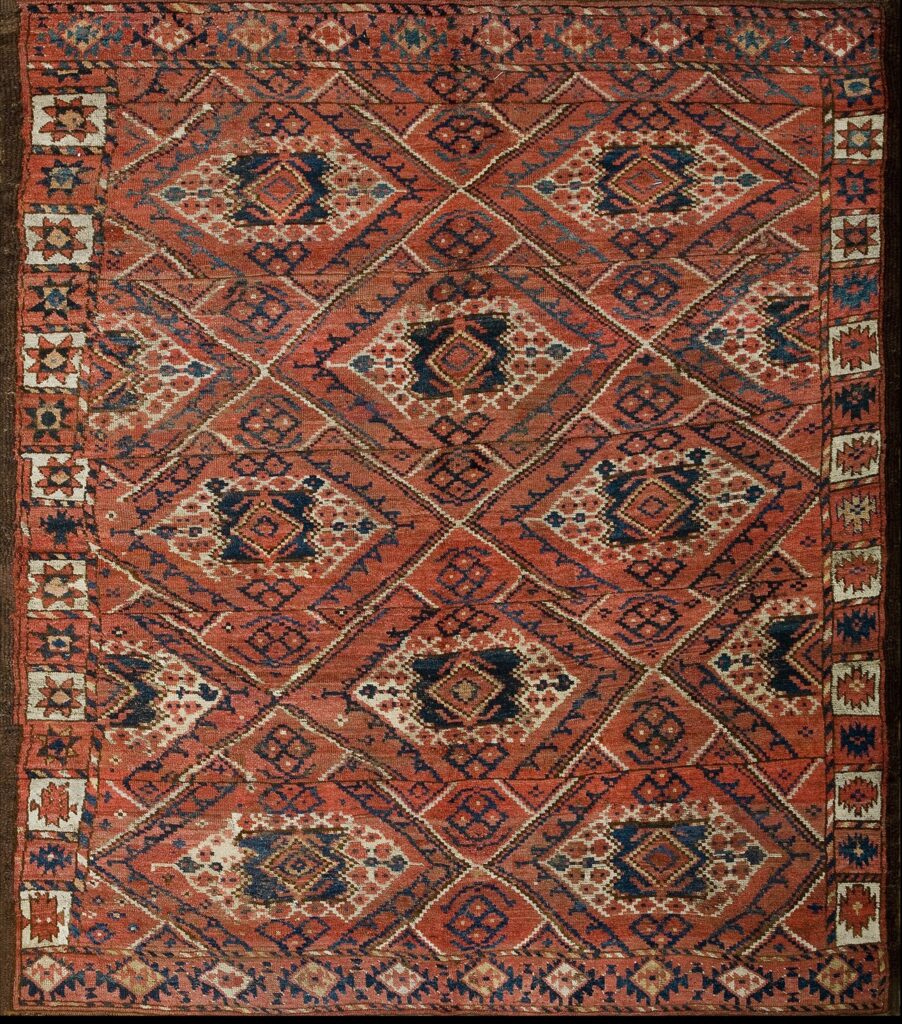
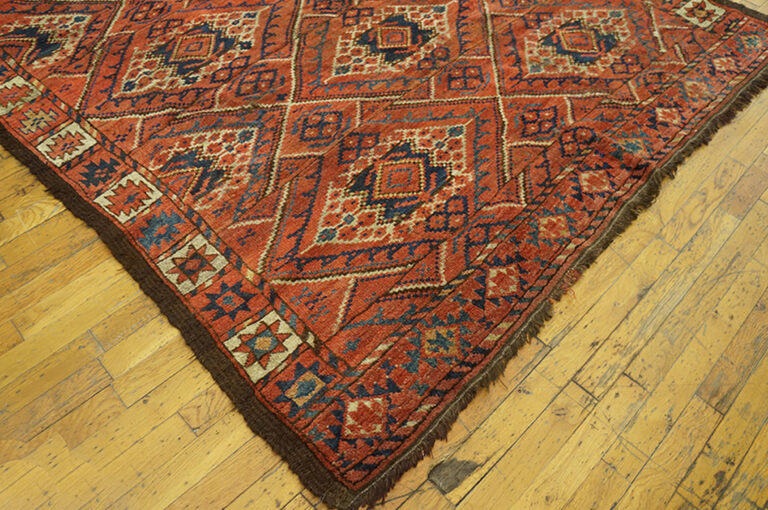
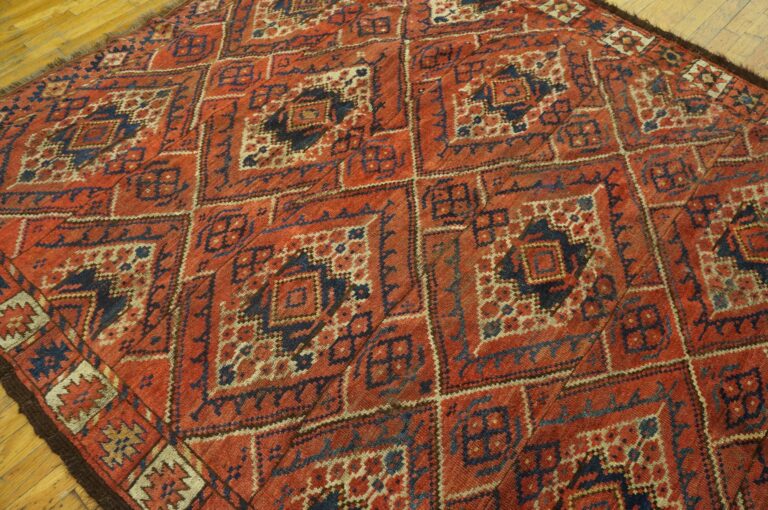
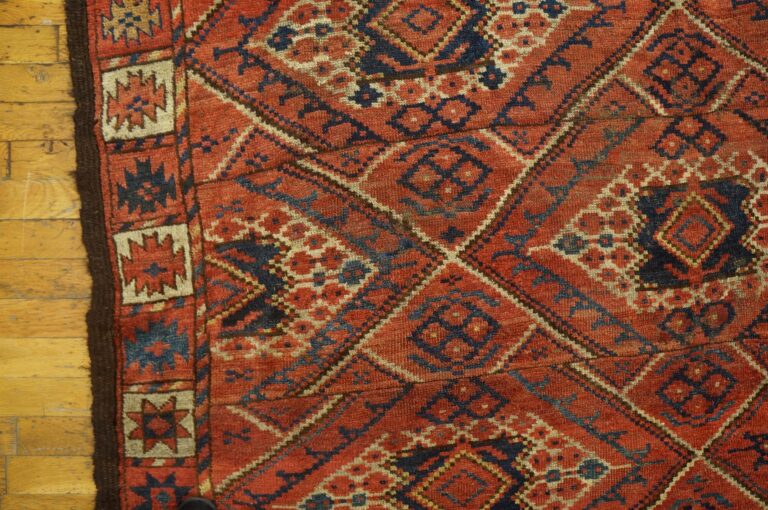
Red Tribal Geometric Antique Late 19th Century Afghan Ersari Beshir Wool Pile Rug
$6,800.00
| Stock number | 20-11065 |
| Size | 6 ft 3 in x 7 ft 3 in (1.91 m x 2.21 m) |
| Origin | Afghanistan |
| Age | Circa 1870 |
| Style | Ersari |
| Materials | Wool |
| Construction | Hand Knotted Pile |
| Colors | Red / Rust |
| Pattern | Allover, Geometric |
This late 19th-century Afghan Ersari Beshir carpet is a prime example of Central Asian tribal rug weaving, representing the nomadic heritage of the Turkmen tribes along the middle Amu Darya river. While many Turkmen rugs are known for their rigid, repeating "Gul" (tribal seal) patterns, the Beshir sub-group is celebrated for its more creative, fluid, and often "Bukhara-influenced" designs, making this specimen a rare bridge between tribal ruggedness and sophisticated artistry. The composition is centered upon a powerful tribal geometric design, likely featuring a cloud-band motif or a series of elongated, stylized medallions. Unlike the starkly mathematical layouts of Tekke or Yomut rugs, the Beshir aesthetic is more "painterly." The motifs are rendered with a primitive, hand-drawn quality that feels organic and alive.