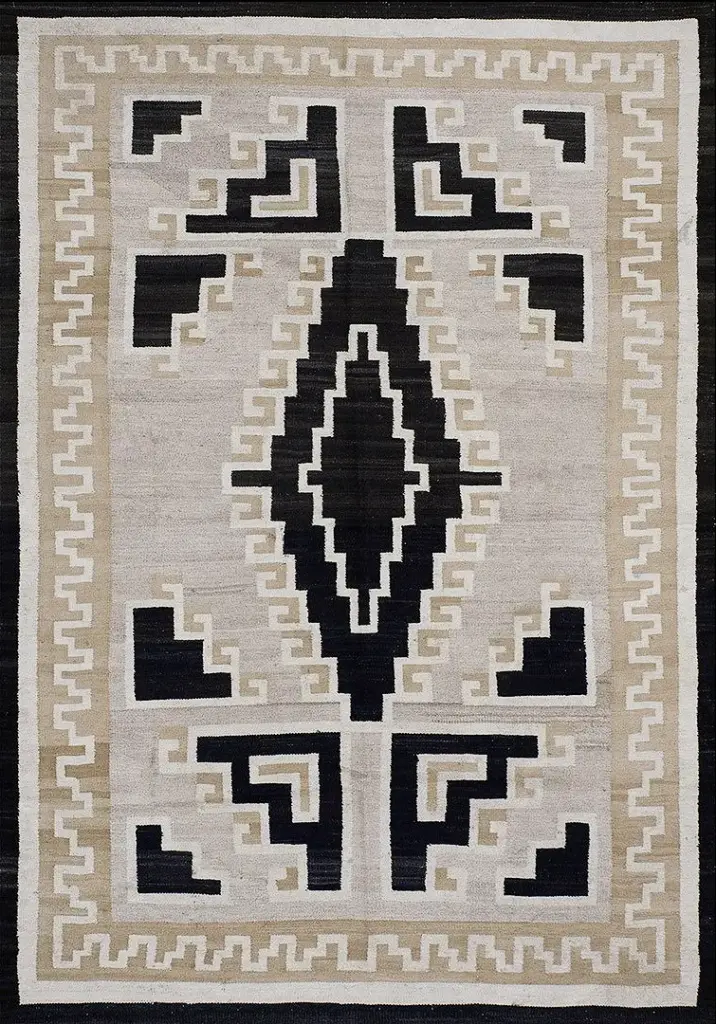
Rare Two Grey Hills Design Antique Gray Geometric Native American Navajo Flatweave Tribal Rug
| Stock number | 19424 |
| Size | 5 ft 4 in x 7 ft 10 in (1.63 m x 2.39 m) |
| Origin | Native American |
| Age | Circa 1930 |
| Style | Navajo |
| Materials | Wool |
| Construction | Flat Weave |
| Colors | Gray |
| Pattern | Geometric, Medallion |
Originating from the remote eastern slopes of the Chuska Mountains in New Mexico, the "Two Grey Hills" style represents the technical zenith of the Navajo (Diné) rug weaving tradition. Developed in the early 20th century under the influence of traders Ed Davies and George Bloomfield, this regional style is defined by a commitment to the natural: no synthetic dyes are used. Instead, weavers achieve their famed spectrum of greys, tans, and deep charcoals through the laborious process of "carding"—blending the wool of different sheep by hand to create custom, variegated hues. The Aesthetic: Architectural Precision This particular Native American rug showcases the hallmark Two Grey Hills layout: a complex, multi-bordered composition centered around a powerful, serrated diamond.